The Making of a Therapist: Lessons from Horses and Celebrating 40 years of Barnfield Riding School
There are times when people ask how I became a sex and relationship therapist. They imagine it began with psychology books, counselling courses, or years spent in consulting rooms. In truth, I think my first teachers had four legs.
For fifteen years, Barnfield Riding School was my world. I designed every corner of it, dreaming it into existence long before the first stable stood. My first husband, Rob Grayson, built it, turning those dreams into steel frame and brick construction that echoed with hoof beats. Together we created far more than a riding school. We created a place where people and horses could grow in confidence together. This year marks Barnfield Riding School’s 40th anniversary, and it has prompted me to look back with affection and gratitude.
One of the things I remain especially proud of is that we started Barnfield Riding for the Disabled Group, which is still going strong today. Watching horses enable people to discover confidence, freedom and joy was a privilege that often brought tears to my eyes. I remember one teenage boy with severe autism who rarely made eye contact and hardly spoke to anyone. With his pony, everything was different. Week by week he became calmer, more communicative, and began quietly talking to his horse. One day he started chatting to the volunteers too. It was as though the horse provided a bridge into relationships that had previously felt too overwhelming.
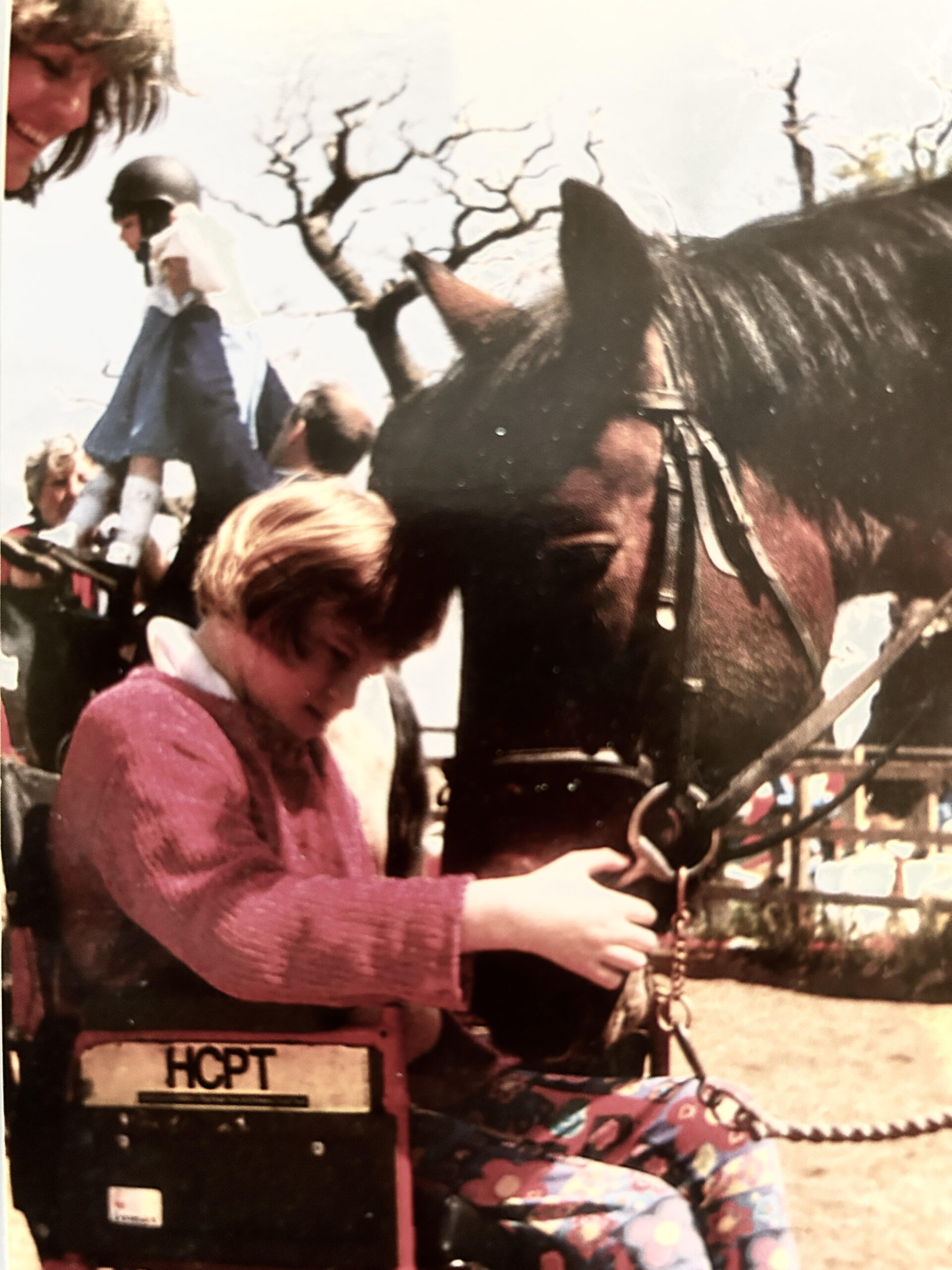
One young girl had cerebral palsy. Her muscles were often painfully tight. After each riding session her parents noticed she moved more freely and seemed more relaxed. They told us the benefits lasted for days afterwards, making everyday activities just a little easier.
One of the greatest gifts the horses gave wasn’t simply physical. For many disabled riders, it was the rare experience of being in control. Instead of people constantly doing things for them, they discovered they could communicate with this magnificent animal and influence where it went. The smile that came with that discovery was unforgettable. Moments like these reminded me that healing and growth often happen in ways we could never have predicted.
Looking back, I can also see why horses became so important to me. I often found them easier to understand than people. Relationships between humans felt complicated, while horses seemed beautifully honest. They responded to what was really happening rather than what I wished was happening. They taught me to notice breathing, posture, muscle tension and intention. They taught me that what isn’t said often matters just as much as what is.
They also taught me about clarity. If I wasn’t clear where I wanted to go, my horse probably wouldn’t be either. Again and again they reflected something back to me about myself, whether that was confidence, uncertainty, impatience or calmness. I didn’t think of these as life lessons at the time. I was simply learning to ride better. Only years later did I realise how much they had taught me about relationships, trust and communication.
Those lessons quietly followed me into my work as a therapist. Whether I am facilitating a Pesso Boyden workshop or sitting with a couple in conflict, I still find myself paying attention to the things that are easy to miss: a pause before someone speaks, a tightening around the eyes, the way someone leans towards or away from another person. I sometimes wonder whether that way of noticing began in the stable yard.
Dressage became my passion. To me, it was never about making a horse obey. At its best, it was about partnership, timing and mutual respect. There were fleeting moments when horse and rider moved together so harmoniously that almost nothing seemed visible between them. Those moments taught me that the best relationships are built not on force but on connection.
Although Barnfield Riding School belongs to what I sometimes call my “previous life”, it has never really been left behind. The horses, the staff and the stables still live vividly in my memory. They shaped me in ways I am still discovering, and I suspect they prepared me for the work I would eventually come to love.
I wonder what experiences in your own life have quietly shaped the person you have become? Perhaps there was a job, a hobby, a volunteer role, or someone you met along the way. At the time it may have seemed quite ordinary, yet looking back you can see that it was laying the foundations for the life you would later lead. Sometimes we only recognise our most important teachers in hindsight.
Looking back now, I realise those horses taught me some of the most important lessons I have ever learnt about relationships: how to listen without words, how to earn trust rather than demand it, and how real change comes through patience, consistency and kindness. The irony is that I thought I was teaching people to ride. In truth, the horses were teaching me how to become a therapist.
Juliet Grayson
July 2026
Click here to give feedback, which Juliet loves to receive: https://bit.ly/julietmuses
See the list of Pesso Events that Juliet is leading: https://therapyandcounselling.co.uk/pesso-events/
If you are a therapist, counsellor or health worker, and interested in thinking more about conflict, and you are a therapist, you might want to attend the Couples in Conflict module of the Certificate in Working with Couples.
www.therapyandcounselling.co.uk
If you’re a therapist and watching this you might be interested in my six modular workshops on how to work with couples. Go to www.therapyandcounselling.co.uk and look either at the calendar or look at the course for therapists: Certificate in Working with Couples.
Juliet enjoys hearing comments about how these talks impact people – both positive and negative. If you have time, please let her know your thoughts
https://docs.google.com/forms/d/e/1FAIpQLScMcMLPGU2WY1sUZJKF7l_BBEi0h5EkRD5lCOn3xpLvvdKnBw/viewform
To sign up for more of these – and info about CPD workshops – https://therapyandcounselling.co.uk/sign-up-for-info/
If you are a therapist, to join an email support group for therapists in the UK where you can ask questions, find out about CPD, and get referrals, go to https://therapyandcounselling.co.uk/counsellor-network-groups-uk/
You’ll find more Juliet’s Musings on https://therapyandcounselling.co.uk/juliets-thoughts-for-the-day/.